“Dogger” and “rigger” get used as if they mean the same thing. They do not. They are two different jobs with two different tickets, and mixing them up can send you off to the wrong course.
If you are looking up the meaning of rigging, here is the straight answer: what it means, how it differs from dogging, and which licence you need to get to work.
What rigging means on a construction site
The word “rigging” gets used in a few places. On a sailing ship it is the ropes and masts. In film and theatre it is the gear that flies lights and scenery. But if you are looking at a career in construction, rigging means moving, placing and securing heavy loads using mechanical load-shifting equipment.
A rigger sets up and dismantles the things that do the lifting. That covers structural steel erection, hoists, precast concrete panels, safety nets and static lines, cranes and the platforms that hang off them. It is skilled work, and it is licensed for a reason. A dropped load hurts people.
What dogging means
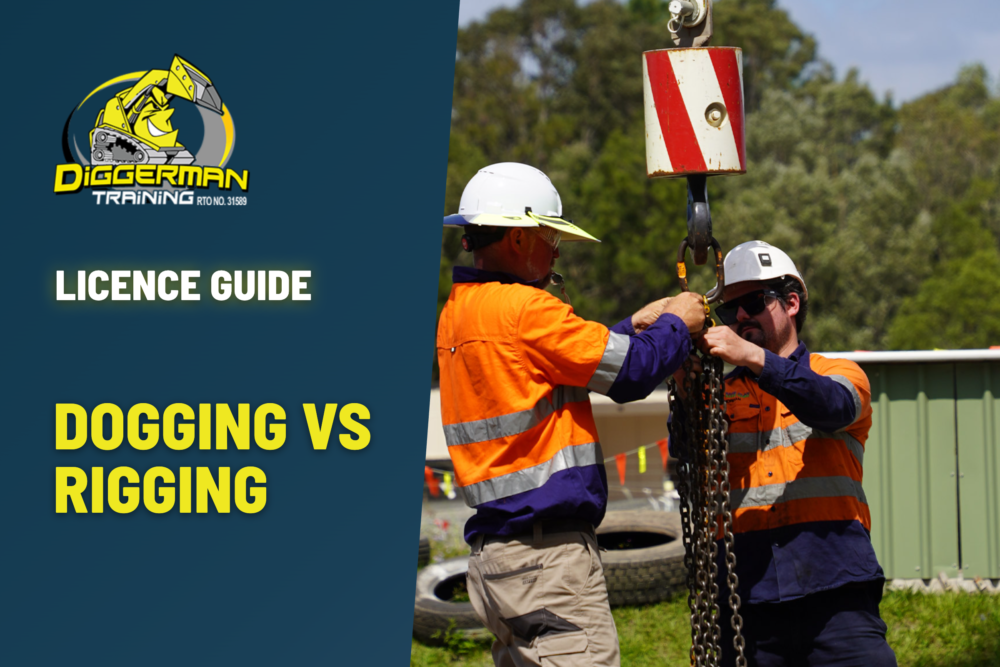
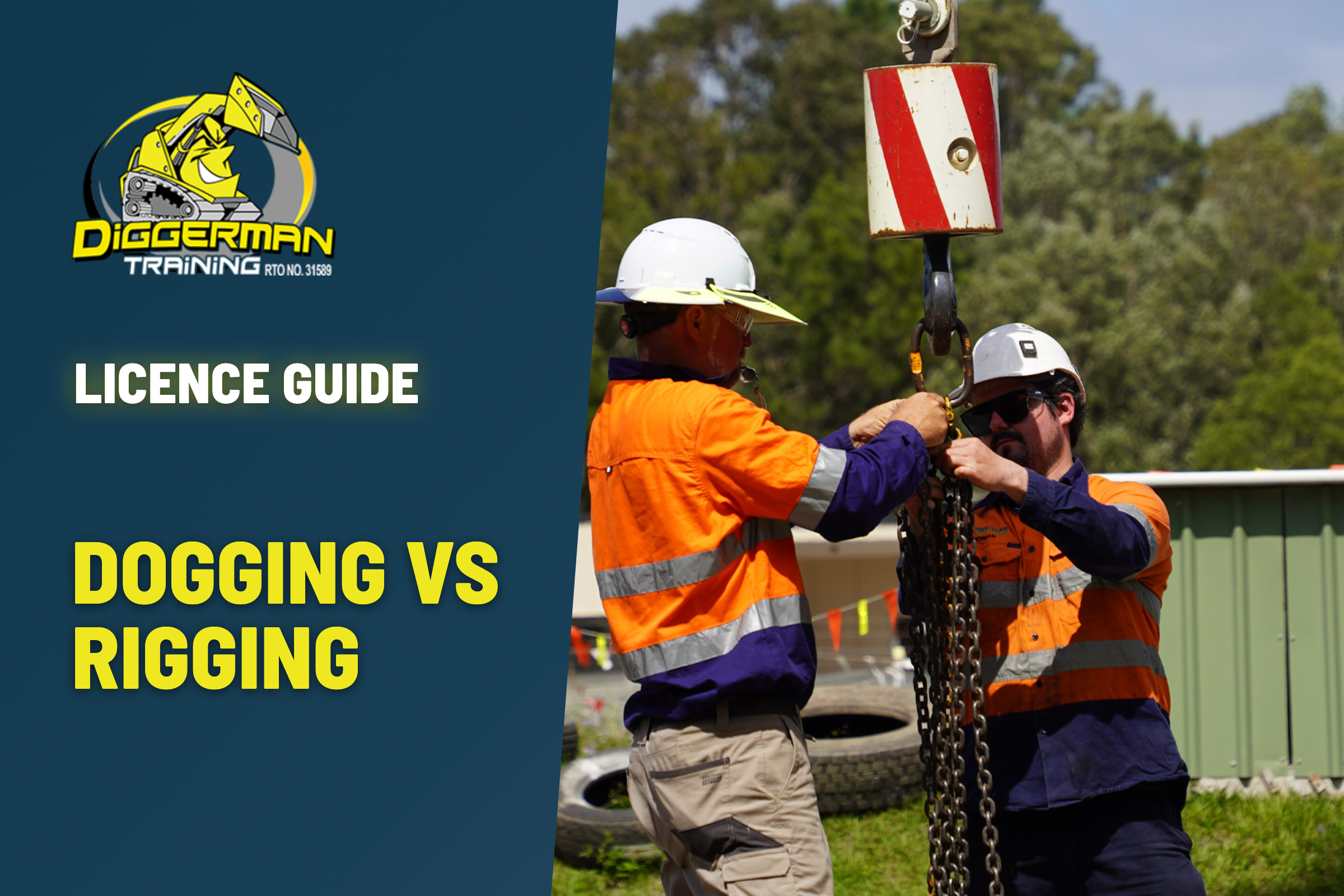
Dogging is the load-handling side of a lift. A dogger does two core jobs. First, slinging the load, which means choosing the right lifting gear, inspecting it, and rigging the load so it lifts safely and stays balanced. Second, directing the crane operator, especially when the load is out of the operator’s line of sight.
If you have ever seen someone guiding a crane with hand signals or a two-way radio while a load swings into place, that is a dogger doing their job.
Dogging vs rigging: the real difference
Here is the simplest way to hold the two apart.
A dogger prepares and directs the lift. They assess the load, pick and check the gear, sling it, and talk the crane operator through the move.
A rigger builds and pulls apart the equipment and structures that make bigger lifts possible. Rigging work includes dogging, plus a much wider scope of setting up cranes, hoists and steel.
So the two are not rivals. Rigging is the next step up from dogging, and a rigging licence already includes the dogging work underneath it.
The licence classes and how they stack up
Dogging and rigging are High Risk Work Licences under the national licensing standard. There is one dogging class and three rigging classes, and they build on each other in order. You have to hold the one below before you can start the next.
- Dogging (DG) covers slinging techniques and directing a crane or hoist operator. There is no prerequisite. This is the entry ticket.
- Basic rigging (RB) includes all dogging work, plus structural steel erection, hoists, precast concrete members, safety nets and static lines, and cantilevered crane loading platforms. You must hold your dogging licence first.
- Intermediate rigging (RI) adds rigging work involving cranes, conveyors, dredges and excavators, plus tilt slabs, hoists with jibs, demolition of structures, and dual lifts. You must hold basic rigging first.
- Advanced rigging (RA) adds gin poles and shear legs, flying foxes and cableways, guyed derricks, and hung scaffolds. You must hold intermediate rigging first. Diggerman Training does not currently run advanced rigging, so get in touch if that is the ticket you are after and we will point you in the right direction.
Each class is a separate licence issued by the work health and safety regulator. In Queensland that is WorkSafe Queensland. You cannot skip a rung on the ladder. A dogging licence is also the starting point for anyone who wants to work around cranes and lifting.
Where should you start, and how far up?
For most people the answer is dogging. It is the foundation ticket, it is the prerequisite for every rigging class, and it gets you working on site the fastest.
If your goal is steel erection, hoists or general rigging work, the path is dogging first, then basic rigging. That combination covers a large share of the day-to-day lifting work on commercial and civil sites.
If you already hold your dogging ticket and you want to move up, basic rigging is your next step, then intermediate when the work calls for cranes and bigger structures. There is no point paying for a class above what your job needs. Match the ticket to the work in front of you.
All three courses at Diggerman Training run over five days, and you need to be at least 18. Eligible students can access CSQ funding, which brings the out-of-pocket cost down. You train on real machinery with trainers who have spent 20-plus years doing this work, not just teaching it.
Real training on real gear
Small classes and hands-on time are what separate a ticket you scraped through from skills you can actually use on site.
“Definitely a special mention to the 2 trainers Sean (dogging) and Callum (C6) these 2 blokes went above and beyond to make sure we had all the information we needed to completed the assessments.” – Mick
“Steve is a trainer that goes above and beyond teaching you real world examples and knowledge to make you a better rigger not just stuff that you need to pass.” – Nathan
Key Takeaways
- Dogging is slinging and directing the load. Rigging is setting up and dismantling the gear and structures that lift it.
- Rigging includes dogging, so a rigging licence builds on your dogging ticket.
- The four classes go in order: dogging, basic rigging, intermediate rigging, advanced rigging. You cannot skip a class.
- Most people start with dogging, then basic rigging. Match the licence to the job you want.
Courses mentioned in this article: – CPCCLDG3001 – Licence to perform dogging – CPCCLRG3001 – Licence to perform rigging basic level – CPCCLRG3002 – Licence to perform rigging intermediate level
Not Sure Which Ticket to Start With?
If you have read this far and you are still weighing up dogging against rigging, the quickest way to sort it is a five-minute chat about the work you want to do. We will point you to the right starting ticket, not the most expensive one.
Have a look at the dogging licence course if you are starting out, or the basic rigging course and intermediate rigging course if you are ready to move up. If you want to bundle tickets and save, ask us about the high risk licence bundles.
Frequently Asked Questions
Q: What does a rigger actually do?
A rigger moves, places and secures heavy loads, and sets up and dismantles the cranes, hoists and structures used to do it. The work ranges from structural steel to precast concrete, depending on the licence class held.
Q: Do I need a dogging licence before I can do rigging?
Yes. You must hold a dogging licence before you can start a basic rigging licence, and you work up through the classes in order.
Q: Is dogging or rigging the better place to start?
Dogging. It is the entry ticket, it has no prerequisite, and it is required before any rigging class. Most people get their dogging ticket first and then decide whether to move up.
Q: How long does the training take?
The dogging, basic rigging and intermediate rigging courses each run over five days at Diggerman Training. You need to be at least 18 to enrol.
Q: Can I get funding to help with the cost?
Eligible students can access CSQ funding on these courses, which reduces the amount you pay. Contact Diggerman Training to check your eligibility and current pricing.