You have held the ticket for years, you have run the machine day in and day out, and now a site supervisor is telling you that you need a VOC before you can start. If you are not sure what that means, or why your licence on its own is not enough, you are in good company.
A verification of competency is one of the most common things employers ask for on Australian worksites, and one of the least understood. Here is what it actually is, who needs one, and what happens on the day.
What is a verification of competency?
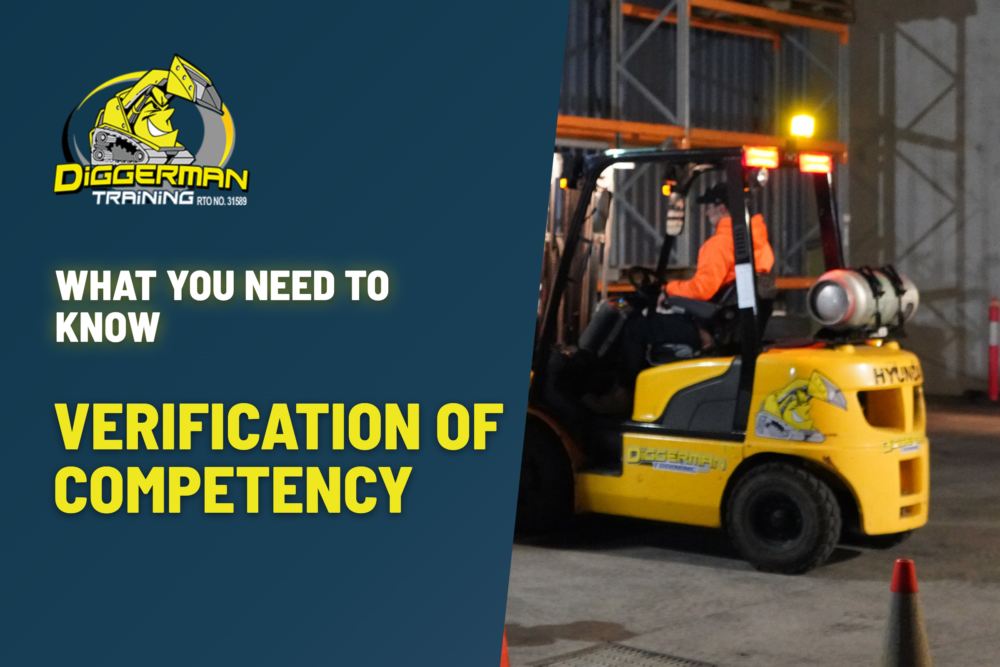
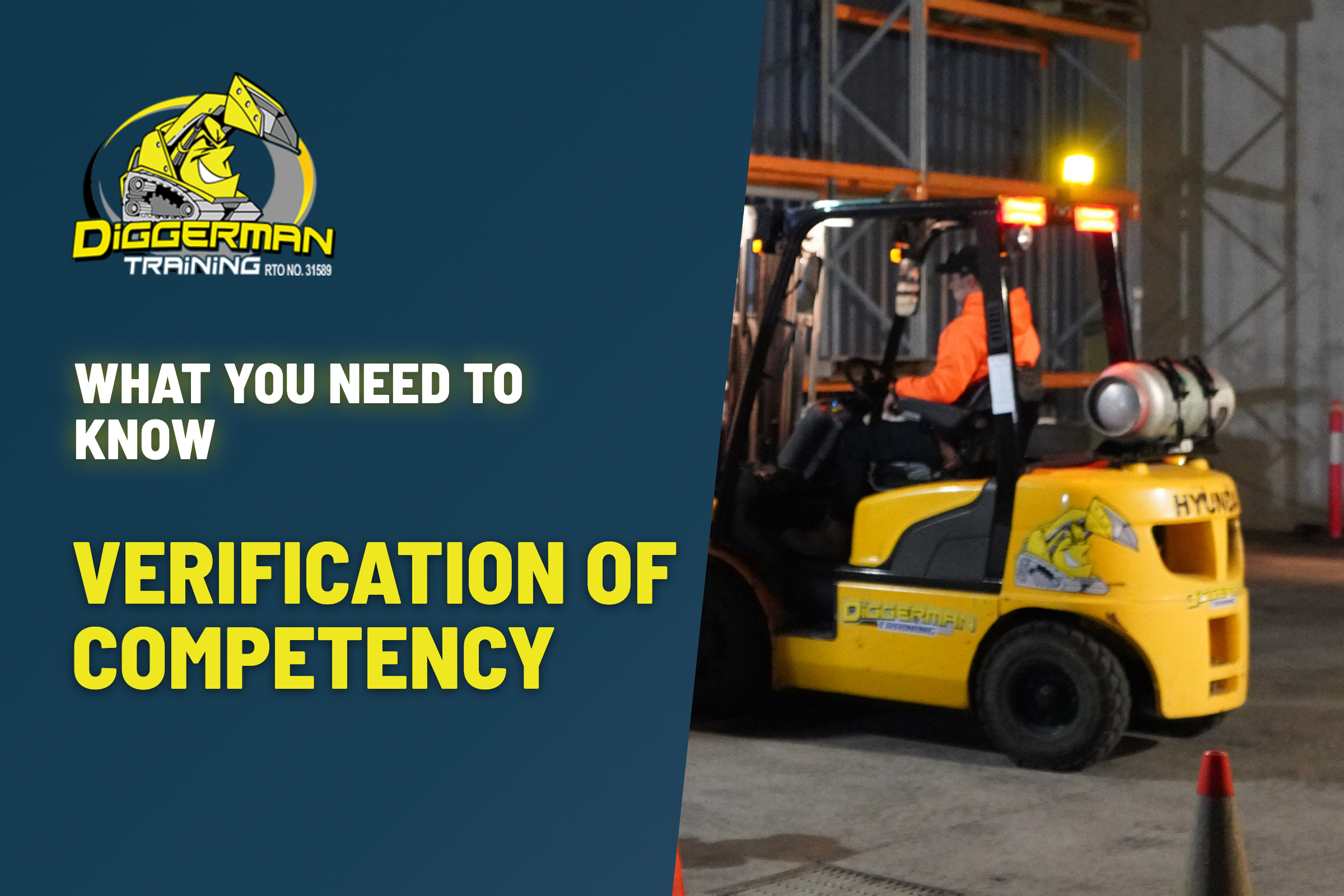
A verification of competency, or VOC, is a short practical assessment that confirms you can currently operate a specific machine or perform a specific task safely and competently. An assessor watches you do the job on the actual plant and equipment, checks your knowledge, and documents that you are up to the workplace standard.
A VOC is a check, not a course. You are not sitting through days of training and you are not walking away with a new licence. You already hold the ticket. The VOC confirms that the skills and knowledge behind it are still there and still current.
That is why so many sites and employers rely on it. A ticket tells them you were assessed as competent once. A VOC tells them you are competent now.
VOC, licence and refresher: how they differ
These three get mixed up all the time, so it is worth being clear.
A high-risk work licence is the formal card you hold for tasks like operating a forklift, a crane or an elevating work platform.
A statement of attainment is the qualification you hold for machine tickets like an excavator ticket or a skid steer.
A verification of competency sits on top of either one. It confirms your current ability, not your paperwork. And a refresher is training you do to top your skills back up when a VOC or your own honesty says they have slipped. A VOC checks where you are. A refresher fills the gap if there is one.
Who needs a VOC?
Plenty of people, and for different reasons.
- Experienced operators who hold the ticket but have been asked by a new employer or site to prove they can still do the job.
- Workers whose ticket is a few years old, especially where the machine, the unit of competency or site-specific requirements have moved on since they qualified.
- New starters being brought onto a site that runs its own competency checks before granting site access.
- Employers who need to confirm a whole crew is competent, often before a project kicks off or an audit lands.
If you have operated the same gear for years without a hitch, a VOC is usually a straightforward morning. It is there to confirm what you already know how to do.
Why employers ask for a VOC
It comes back to a legal duty. Under work health and safety law, a person conducting a business or undertaking, known as a PCBU, has to provide the information, training, instruction and supervision needed to keep workers safe. Confirming that an operator is competent is part of meeting that duty of care.
Workplace Health and Safety Queensland encourages formal, competency-based assessment for operating plant and equipment. A documented VOC is how employers show they have done their homework. The result gets recorded and kept with your training records, which is exactly what an auditor or a principal contractor wants to see. On many sites it is simply a condition of getting through the gate.
How a VOC assessment works
At Diggerman Training a VOC is a practical, hands-on assessment, not a day in a classroom. The whole VOC process is built around what you can do on the machine, not what you can recite in a room. You demonstrate the task on real machinery, an assessor observes and questions you as you go, and your competency is recorded against the relevant unit of competency.
Most VOCs take around half a day, roughly four to six hours depending on the ticket and how many you are verifying. There is one thing you need before you book: a valid statement of attainment for the ticket you want the VOC for. The VOC confirms an existing qualification, so you have to hold that qualification first.
We run VOC assessments across the earthmoving and high-risk machines we train on, from excavators, loaders and skid steers to forklifts, dump trucks and telehandlers. If you are not sure whether we can verify your ticket, ask us.
Real feedback from operators
“Very highly recommend using these guys for licensing and voc. Easy to talk to and ask questions very knowledgeable, there experience will show within minutes can teach anyone to do anything. It’s not all serious will have a laugh throughout the course/s. Highly maintained gear clean facilities and smoko van on the practical day aswel as a coffee van for that pick me up. No pressure in how fast you learn it’s all at your own pace. If your looking for tickets these guys are second to none” – Jake
Key takeaways
- A VOC is a practical assessment that confirms you can currently operate a machine or perform a task safely and competently.
- It is not a course and not a new licence. You already hold the ticket, and the VOC confirms your skills are still current.
- Experienced operators, workers with older tickets, new site starters and whole crews all get asked for one.
- Employers use it to meet their work health and safety duty of care.
- At Diggerman Training a VOC is a hands-on assessment on real machinery, around half a day, and you need a valid statement of attainment for the ticket first.
Not sure whether you need a VOC?
If a site or an employer has asked you for a verification of competency and you are not sure where to start, give us a call. We will tell you which tickets we can verify, what you need to bring, and whether a VOC is the right path or you would be better off with a refresher or the full course.
Book a Verification of Competency
Frequently asked questions
Q: How long does a VOC take?
Most VOCs take around four to six hours, so roughly half a day. The exact time depends on the ticket and how many machines you are being verified on. Tell us your situation when you book and we will map it out.
Q: How much does a VOC cost?
Give us a call or send an enquiry through the VOC page and we will give you the current price. It is worth checking with us directly rather than going off a figure you saw somewhere, because pricing can change over time.
Q: How often do I need a VOC?
There is no fixed legislated interval. It comes down to what your employer or the site requires, so check with them, and you may be asked for one whenever you start somewhere new.
Q: Is a VOC the same as a refresher?
No. A VOC checks whether your current skills meet the standard. A refresher is training you do to top those skills back up. Often a VOC comes first, and refresher or gap training only follows if the assessment shows a gap, sometimes with a quick reassessment to confirm you are back up to speed.
Q: What if my skills have slipped since I got my ticket?
We will tell you straight. If too much time has passed and your skills need real work, we will point you toward a refresher or the full course instead. Nobody here signs off a VOC on someone who is not genuinely up to it.
Q: Do I still need a VOC if I already hold the licence?
Often, yes. Holding the licence or statement of attainment shows you were assessed as competent at some point. A VOC confirms you are competent now, which is what many employers and sites want to see before you operate their gear.
Q: Can you VOC our whole crew?
Yes. We run group VOC assessments for employers, either at our Sunshine Coast facility or through on-site training in Brisbane and surrounding regions where you have the machines and space. Minimum numbers apply. Call us with how many operators you have and which tickets they hold.