You have seen the ads. Good money, big machines, two weeks on and a week off. But when you start looking at FIFO jobs, every ad seems to want experience, tickets and medicals you do not have yet, and nobody explains where to start.
Getting into FIFO work is a step-by-step process, not a lucky break. This guide covers what fly in, fly out work actually is, how rosters work, the kinds of roles on offer, what employers check before you fly out, and the tickets that give your resume a real chance.
What is FIFO work?
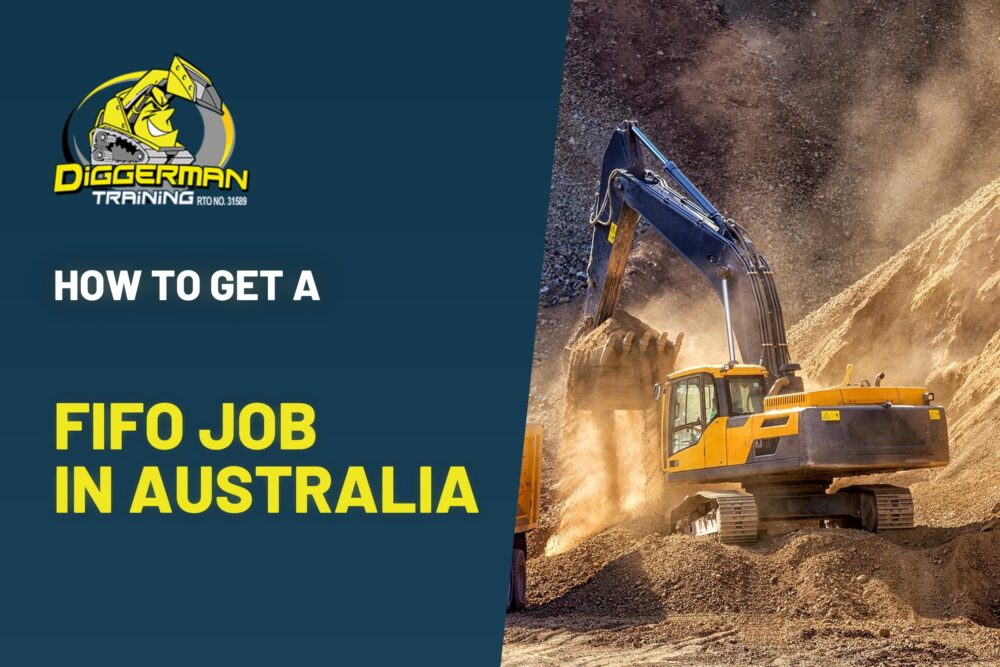
FIFO stands for fly in, fly out. Instead of moving to a remote mine or project, you fly to site for a set block of days, work your shifts, then fly home for your days off. Some sites are close enough to drive to, which is called DIDO (drive in, drive out).
Most FIFO work is in mining, but not all of it. Large civil and construction projects, such as roads, rail, dams and energy builds, also bring in crews on a fly in, fly out basis when the job is too far from a town to fill locally.
While you are on site, you usually live in a camp, often called a village. Your room and meals are generally sorted, so your job on swing is simple: work, eat, sleep, repeat. Check the village facilities and what is included in any offer before you sign.
How FIFO rosters work
A roster is written as days on, then days off. An 8/6 roster means eight days on site and six days at home. A 14/7 roster, sometimes written as 2:1, means two weeks on and one week off. You will also see even-time rosters, where your time off matches your time on.
The roster shapes your whole life, so look at it as closely as the pay. A longer swing usually means fewer flights and more hours, but more time away from family. A shorter, even-time roster gives you more balance. Which roster you get depends on the employer, the site and the role, and it is written into the job ad, so read it before you apply.
Shifts are long, and many sites run day and night shift. Plan for that from day one, especially your sleep.
The kinds of FIFO roles on offer
The work falls into a few broad groups. Knowing where you fit makes your search a lot faster.
Mining roles
Mining jobs make up most FIFO work, across Western Australia (WA), Queensland (QLD), New South Wales and beyond. Roles range from haul truck operators and plant operators to drillers, drillers offsiders, trade assistants, utility workers, maintenance crews and underground mining crews. Mining contractors and mining services companies hire a big share of these workers, not just the mine owners.
Civil and construction roles
Remote civil projects need operators on excavators, loaders, rollers, graders and articulated haul trucks, plus labourers, dogmen and riggers. If you already work in civil construction, this is often the most natural path into FIFO.
Support roles
Every remote site also needs hospitality staff, cleaners, camp attendants, cooks, logistics or stores staff and drivers. These entry-level roles can be a way in for people with no site experience, though they need their own training and checks.
What employers ask for before you start
Every employer has its own process, but most of them check the same handful of things. Get these sorted early and you will be ready to say yes when the call comes.
The right tickets
Your tickets tell an employer you can do the job safely from your first shift. For plant roles, that means a ticket for each machine you want to run. Most sites also expect general safety tickets, and in Queensland coal, a Standard 11 mining induction (more on that below). We cover the best tickets in the next section.
A pre-employment medical
Expect to pass a pre-employment medical before you start. In the Queensland coal industry this is formal: a coal mine worker health assessment is required before you start work as a mine worker and when you change employers, and the employer arranges and pays for it. You can read how the Coal Mine Workers’ Health Scheme works on the Queensland Government site. Other states and sites run their own medicals.
Drug and alcohol testing
Plan on drug and alcohol screening before you start and random testing on site. In Queensland coal mines, the safety and health management system has to provide for random testing for alcohol and drugs under the Coal Mining Safety and Health Regulation 2017. A failed test can end a job before it starts, so take it seriously.
Inductions, including Standard 11
Each site runs its own induction before you go to work. In Queensland’s coal mining industry, you also need a generic induction that meets Recognised Standard 11, Training in Coal Mines, under the Coal Mining Safety and Health Act 1999. It is often just called Standard 11, or S11.
Our Standard 11 mining induction course is a two-day, face-to-face course at our Sunshine Coast training facility. It covers working safely, first aid response, site procedures, local risk control, workplace communication and responding to emergencies, and you receive a Statement of Attainment when you complete it. The course is made up of six nationally recognised units: RIIWHS201E, RIIERR205D, RIIGOV201E, RIIRIS201E, RIICOM201E and RIIERR302E.
Standard 11 is generally recognised for five years, but some mine sites ask for a refresher sooner, so check what your employer requires. If you already hold one, the Standard 11 refresher keeps you current.
Standard 11 is a Queensland coal requirement. Western Australia and other states have their own induction rules, so check what the site you are applying for asks for.
The best tickets for a FIFO job
This is where most people waste money, buying tickets that look good on paper but do not match the jobs they are chasing. Match your tickets to the role.
We go deeper on this in our guide to the best tickets for landing a FIFO job.
One of our trainers, who has spent more than 20 years in the industry, puts it simply:
“Well, just like civil with the articulated haul truck, in mining and FIFO, the rigid haul truck, especially for mining, is one of the best ones. If you’re looking for FIFO in the civil industry, it’s still with the articulated haul truck, but also front end loader is a great one as well.”
For mining roles
The rigid haul truck ticket is one of the most valuable tickets for mining FIFO. Rigid haul trucks move ore and overburden on open-cut mines, and haul truck operator is a common starting role for new operators in remote mining. Pair it with your Standard 11 if you are targeting Queensland coal.
For civil roles
On civil projects, the articulated haul truck ticket and the front end loader ticket are the two that come up most. An excavator ticket is also worth having for civil work.
Stack your tickets
Employers like operators who can jump on more than one machine. One ticket gets you considered. Three or four gives a supervisor options on a busy shift. If you plan to do several, our machinery bundles let you pick three or five machine tickets together.
Our machine tickets run every week with multiple time slots, including day and night practical sessions, and online theory is available if you cannot make the Monday theory session. That makes it easier to fit training around the job you already have.
Safety tickets that round out your resume
Depending on the site and role, these are worth having:
- White Card for construction and civil sites
- Working at heights
- Confined spaces
- Provide first aid
How to get a FIFO job with no experience
“No experience” FIFO jobs do exist, but there are more people chasing them than there are seats on the plane. Here is how to give yourself the best shot.
- Pick a lane. Decide whether you are chasing mining, civil or support roles. It decides which tickets you need.
- Get the right tickets first. Apply with your tickets already in hand. “Happy to get my ticket” is a weaker line than a statement of attainment with a unit code on it.
- Get some local site time if you can. Plenty of operators start on a civil job close to home, then move into FIFO with real hours on the machine. That experience is often what tips an application your way.
- Search in the right places. Look on SEEK and Indeed, on mining company and contractor career pages, and with labour hire firms that place fly in, fly out crews. Search for new to industry or entry-level programs as well.
- Make your resume easy to scan. List every ticket with its unit code and the date you got it. Put any site experience at the top.
- Be ready to move fast. Have your licence, ID and paperwork in order, keep clean for drug and alcohol testing, and answer your phone. Hiring can go from interview to medical within days.
FIFO is a real job with a real application process. Be wary of anyone who asks you to pay a fee to get you a guaranteed FIFO job. Legitimate employers advertise their roles openly and arrange their own medicals and site inductions. Generic tickets like Standard 11 come from a registered training organisation.
The pros and cons of FIFO work
Fly in, fly out work suits some people and wears others down. Go in with your eyes open.
The upside
- A strong salary potential, especially for skilled operators
- Long blocks of time off at home
- Meals and accommodation on site are usually taken care of
- A fast way to build hours on big machines
The downside
- Long shifts and night shift
- Time away from partners, kids and mates, including birthdays and holidays
- Fatigue, which builds up over a long swing
- Camp life does not suit everyone, and some people find the isolation hard on their mental health
The roster matters as much as the rate. Talk it through with your family before you apply, and look for an employer with good support for workers on site.
What our students say
Plenty of our students come to us wanting a career change into mining and heavy machinery. Here is what two of them said about their training.
“Highly recommend these guys!! From a 40 something year old woman who’s spent the last 20 odd years raising kids and suddenly decides she wants to drive haul trucks for a living… You guys gave me the confidence and pushed me to believe in myself. Thank for being amazing!! 🤙🤙” – Calida
“I have completed my S11 Coal Board training with Diggerman and cant fault them at all. The entire process from the initial booking was straightforward. Steve our trainer was fantastic, really knowledgeable guy who has been around the industry for a long time. He really goes over and above with what to expect from your first job in mining. The little pack at the end of the course with some goodies was a nice touch! Thanks so much Steve and the team at Diggerman!” – Lauren
Key takeaways
- FIFO means fly in, fly out. You work a block of days on a remote site, then fly home for your days off.
- Read the roster as closely as the pay. It shapes your life at home.
- Expect a pre-employment medical, drug and alcohol testing and a site induction. Queensland coal also needs Standard 11.
- For mining, the rigid haul truck ticket is one of the best. For civil, look at the articulated haul truck, front end loader and excavator.
- Get your tickets before you apply, list them clearly, and get local site hours if you can.
Courses mentioned in this article:
- RIIMPO338E – Conduct rigid haul truck operations
- RIIMPO337E – Conduct articulated haul truck operations
- RIIMPO321F – Conduct civil construction wheeled front end loader operations
- RIIMPO320F – Conduct civil construction excavator operations
- CPCCWHS1001 – Prepare to work safely in the construction industry
- RIIWHS204E – Work safely at heights
- RIIWHS202E – Enter and work in confined spaces
- HLTAID011 – Provide First Aid
- Mining Induction – Standard 11 Compliant Course
- Mining Induction – Standard 11 Refresher
Not sure which tickets you need for FIFO?
If you are serious about working away and not sure where to start, call the Diggerman Training team on (07) 5351 1811 or email training@diggerman.net.au. Tell us whether you are chasing mining or civil, what tickets you already hold, and where you want to end up. We will tell you straight which tickets will help and which ones you can skip.
We train at our Sunshine Coast facility in Coolum on real machinery, with experienced trainers and small classes.
Frequently asked questions
Q: What does FIFO mean?
FIFO means fly in, fly out. You fly to a remote work site for a set number of days, live in camp while you work, then fly home for your days off. DIDO, or drive in, drive out, works the same way when the site is within driving distance.
Q: How much does FIFO pay in Australia?
There is no single FIFO salary. It depends on the role, the roster, the site and your experience, and it changes over time. The most reliable guide is the job ads themselves, since many list a rate or salary. Compare roles on the same roster so you are comparing like with like.
Q: Is FIFO work in Australia legit?
Fly in, fly out work itself is a normal part of the mining and construction industries in Australia. What you need to watch for is anyone charging you a fee to guarantee you a FIFO job. Apply through employers, contractors and established labour hire firms, and get your tickets from a registered training organisation.
Q: What tickets do I need for a FIFO job?
It depends on the job. Plant operators need a ticket for each machine they will run, such as a rigid haul truck ticket for mining or an articulated haul truck, front end loader or excavator ticket for civil. Queensland coal mines also need Standard 11, and many sites look for safety tickets like a White Card, working at heights or confined spaces.
Q: Can I get a FIFO job with no experience?
Yes, but with no FIFO experience it takes preparation. Get the right tickets first, look for entry-level and new to industry roles, and consider building some local site hours before you apply. Support roles such as hospitality or utility work can also be a way onto site.