

If you’re looking at scaffolding work, the first thing you need is the right licence. In Australia, any scaffolding work where a person or object could fall more than four metres requires a High Risk Work Licence (HRWL), and you can’t get one without completing accredited training through a Registered Training Organisation.
The problem most people run into isn’t the training itself. It’s finding somewhere that actually runs the course.
A scaffolding ticket is the common name for a High Risk Work Licence (HRWL) that allows you to erect, alter and dismantle scaffolding. It’s issued by your state or territory regulator (in Queensland, that’s WorkSafe QLD) after you complete an accredited training course and pass practical and theoretical assessments.
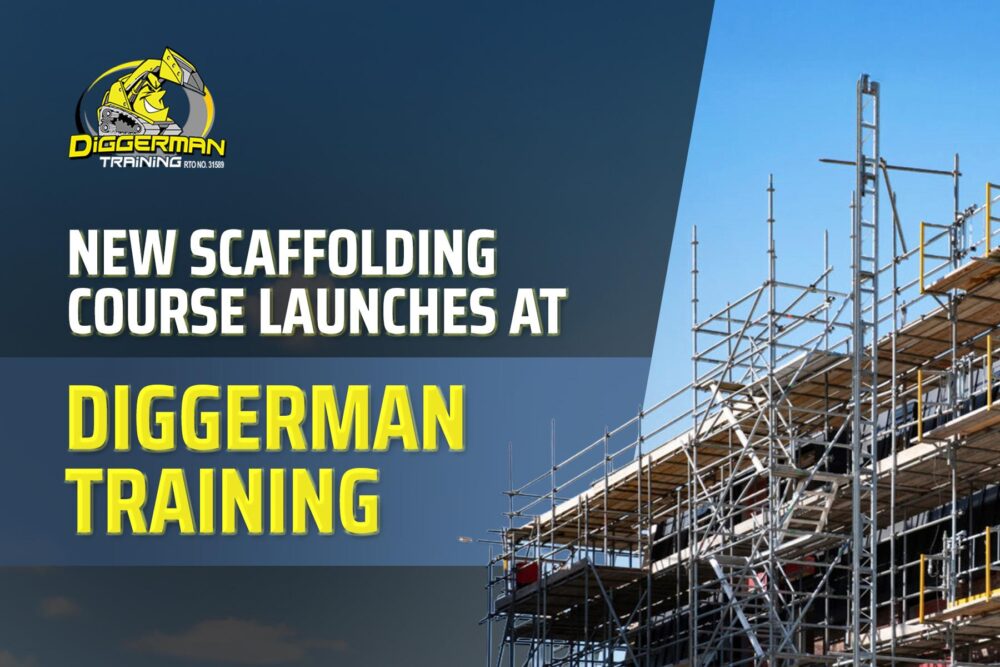
Scaffolding work covers temporary structures built to support a work platform. Think of the frames you see on building sites, around bridges, or wrapping high-rise projects. If there’s a risk of falling more than four metres, the law requires a licensed scaffolder to do the work.
Without the right scaffolding licence, you can’t legally perform scaffolding tasks on a construction site.
There are three levels of scaffolding HRWL in Australia, and each level builds on the one before it.
Basic Scaffolding (SB) is where everyone starts. The basic scaffolding licence covers modular or prefabricated scaffolds, cantilevered materials hoists with a maximum working load of 500kg, ropes and gin wheels, safety nets and static lines, and bracket scaffolds (tank and formwork). This is the licence you need for most standard scaffolding work across residential and commercial construction. The unit of competency is CPCCLSF2001: Licence to erect, alter and dismantle scaffolding basic level.
Intermediate Scaffolding (SI) covers everything in basic plus more complex structures like cantilevered platforms, barrow ramps, safety screens, mast climbers, and tube and coupler scaffolds. You need to hold your SB licence before you can enrol. The unit is CPCCLSF3001.
Advanced Scaffolding (SA) is the highest level and covers suspended scaffolds, hung scaffolds, and cantilevered hoists. You need both your SB and SI licences before training at this level. The unit is CPCCLSF4001.
For most people entering the industry, the basic scaffolding ticket is the starting point and the one that opens the door to work.
The process is the same across Australia, though you apply through your state’s regulator after completing training.
1. Enrol in an accredited scaffolding course. You need to complete your training through a Registered Training Organisation (RTO) that delivers the relevant CPCCLSF unit. For the basic scaffolding licence, the course runs for five days and includes both practical and theoretical components.
2. Complete the training and assessment. The course covers planning scaffolding tasks, selecting and inspecting scaffolding equipment, erecting and dismantling scaffolds safely, and working to WHS requirements. You’ll need to demonstrate competency in both practical skills and knowledge.
3. Receive your Statement of Attainment. On successful completion, your RTO issues a nationally recognised Statement of Attainment for the relevant unit of competency.
4. Apply for your HRWL. Your training provider will guide you through the licence application process with WorkSafe (or the equivalent regulator in your state). In Queensland, your application needs to be submitted within 60 days of your assessment.
You must be at least 18 years old to enrol in a scaffolding licence course.
A basic scaffolding course isn’t just theory in a classroom. The bulk of the training is hands-on, practical work with real scaffolding equipment.
You’ll learn how to read scaffolding plans and interpret manufacturer specifications, identify hazards and apply WHS controls, select and inspect scaffold components before use, safely erect, alter and dismantle basic level scaffolding systems, use personal protective equipment (PPE) correctly, and work within Safe Work Method Statements (SWMS) and site procedures.
The practical training prepares you for the range of scaffolding work covered by the SB licence class. By the end of five days, you should be confident setting up and pulling down the types of scaffold systems you’ll encounter on real job sites.
Our basic scaffolding course is $1,750 at full price. For eligible Queensland workers, CSQ (Construction Skills Queensland) funding brings the gap fee down to $500 (plus a $50 admin fee for high-risk work licence courses). That’s a significant saving, and our team can walk you through the funding application when you enrol.
Your High Risk Work Licence is valid for five years from the date of issue. After five years, you renew it through your state regulator. In most cases, renewal doesn’t require you to resit the full course, though your employer may require a Verification of Competency (VOC) to confirm your skills are current.
Your HRWL is nationally recognised. A scaffolding licence issued in Queensland is valid in every other state and territory. You don’t need to retrain if you move interstate or take work in another state.
Scaffolding is one of those trades that stays in demand regardless of what’s happening in the broader economy. Every multi-storey build, every bridge project, every infrastructure upgrade needs scaffolders. With Australia facing a forecast shortfall of up to 300,000 skilled construction workers by mid-2027 and $242 billion worth of major projects in the pipeline, qualified scaffolders are consistently sought after.
Pay reflects that demand. With a basic scaffolding ticket, you’re looking at $40 to $50 per hour. Progress to intermediate and advanced qualifications and experienced scaffolders can earn $70+ per hour, particularly on infrastructure, mining and resource projects.
The career path is clear, too. You start with your SB licence, build experience on site, then progress to intermediate and advanced scaffolding as your skills and confidence grow. Experienced scaffolders move into supervisory roles, safety inspection, or start their own scaffolding businesses.
One of the biggest frustrations for people wanting their scaffolding ticket is actually finding a course. Unlike forklift or excavator training, which dozens of RTOs offer every week, basic scaffolding courses are run by far fewer providers, and many only schedule them a few times a year.
In Queensland, the options are particularly limited. Some people end up waiting months for the next available course, or travelling significant distances to find a provider with spots open.
We’re one of the few RTOs on the Sunshine Coast delivering the basic scaffolding course regularly. We’ve had students travel from as far as Cairns and interstate to complete their SB licence at our Coolum facility, simply because they couldn’t find the course closer to home.
Our reputation for high risk licence training brings students from well outside the Sunshine Coast. The quality of our facility, experienced trainers, and the availability of courses that are hard to find elsewhere makes the trip worthwhile.
“Flew up from interstate to get it after hearing good things about Diggerman Training. The best setup I’ve seen at a training place with great equipment and trainers.” — Jayden
“Trained with multiple RTOs, by far the best. Great trainers and assessors.” — Alex
“The facilities are amazing, set on a little creek it is clean and professional. If you want a place on the Sunshine Coast that is professional and first class pick Diggerman.” — Nathan
We deliver the basic scaffolding course (CPCCLSF2001) at our Coolum facility on the Sunshine Coast. Five days of hands-on training with experienced trainers, real scaffolding equipment, and small class sizes so you get proper supervision.
CSQ funding is available for eligible students, and our team can help you through the application process.
Yes. Any scaffolding work where a person or object could fall more than four metres requires a High Risk Work Licence. This applies across all states and territories in Australia under WHS regulations.
The basic scaffolding course (SB) takes five days. After completing the course and passing the assessment, you receive a Statement of Attainment and can apply for your HRWL through your state regulator.
Our basic scaffolding course is $1,750 at full price. With CSQ funding, eligible Queensland workers pay a gap fee of $500 plus a $50 admin fee. You’ll also need to factor in the cost of your HRWL licence application to WorkSafe QLD.
Your High Risk Work Licence is valid for five years. You renew it through your state regulator before it expires. In most cases, you don’t need to resit the full training course to renew.
With a basic scaffolding ticket, you’re looking at $40 to $50 per hour. Scaffolders with intermediate and advanced qualifications can earn $70+ per hour, particularly on infrastructure and resource projects.
Basic (SB) covers standard, modular and prefabricated scaffolds. Intermediate (SI) adds more complex structures like cantilevered platforms and tube and coupler scaffolds. Advanced (SA) covers suspended and hung scaffolds. Each level requires the previous licence as a prerequisite.
Yes. The basic scaffolding licence qualifies you for a wide range of scaffolding work across residential and commercial construction. Most scaffolding jobs require at least an SB licence.
Yes. Your HRWL is nationally recognised. A scaffolding licence issued in any state or territory is valid across all of Australia.
Meta Title: How to Get Your Scaffolding Ticket in QLD | Diggerman Training Meta Description: How to get your scaffolding ticket in Queensland. Licence levels, training, costs, and CSQ funding explained.

© AB Quality Homes Pty Ltd t/as Diggerman Training